
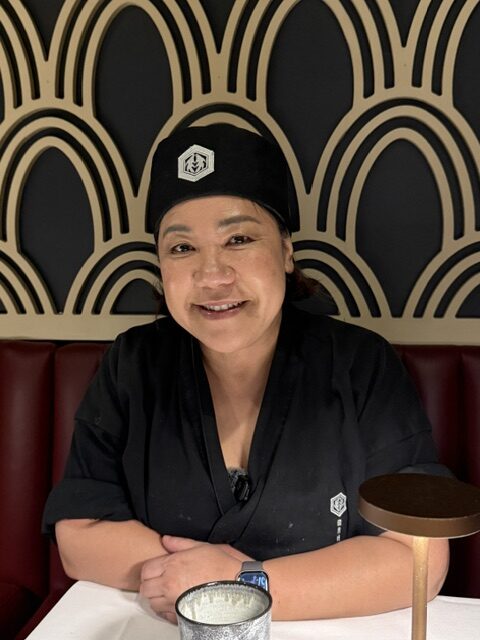
Yuki was born and raised in Tokyo before moving to Canada many years ago. About 25 years ago, she attended the Pacific Institute of Culinary Arts, where she pursued her passion for cooking.
While in college, she worked at a Japanese restaurant, where she gained firsthand experience in how a Japanese restaurant operates. After graduating, she worked two jobs—first with a catering company and later as a Sous Chef at a Japanese restaurant in Tsawwassen.
At the time, Yuki was a single mother and worked hard to support herself and her family. Her determination and experience eventually led her to open her own restaurant, Sushi Mahana, in North Vancouver in 2023. In June 2025, she rebranded the restaurant, marking a new chapter in her culinary journey.
You can follow Chef Yuki Aida on instagram @yukiaidajapan
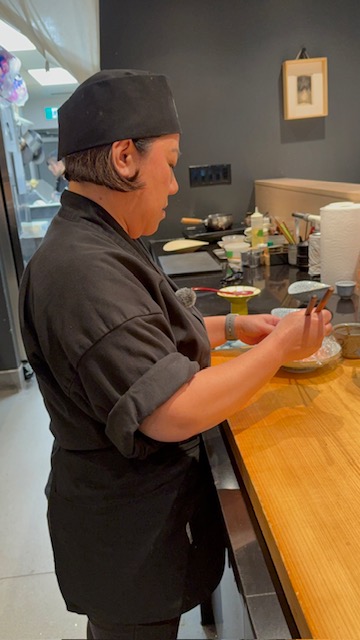
What’s challenging you currently in the restaurant environment?
Every aspect is challenging. Keeping the right people to work with, running the restaurant, and managing everything that comes with being a restaurant owner—it’s all challenging. I’m a woman, and I’m not a formally trained Omakase chef, so there are challenges.
I probably say everything is challenging when you’re owning a restaurant because there are so many pieces to the puzzle. You have to keep everything going all the time.
My son, Leo, helps me run the back office. My daughter, Anna, is also a chef, and she helps me with the menu, testing dishes and creating desserts.
Our two chefs are also very eager to learn, and they’ve been learning quite a bit. I took them to Tetsu, the sushi bar downtown. I’ve been teaching them the basics, including French techniques as well.
What is Omakase?
The fundamental aspect is trust. The restaurant and the chef need to know the best ingredients of the season and have the right resources, including reliable fish suppliers who can provide fresh fish from Japan.
I learned Japanese culinary skills from my mentor, and I’m always trying to stay current and make both the food and the overall experience better.
For me, it’s really about connection and creating something special for a special occasion.
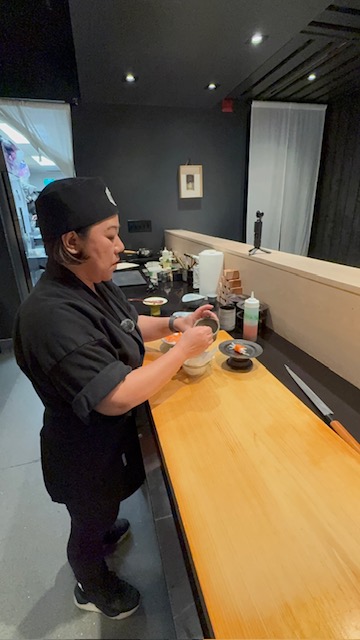
How do you make Koji?
Fermentation rice & koji mold, add Shiokoji (Mahana seasoning) salt and water
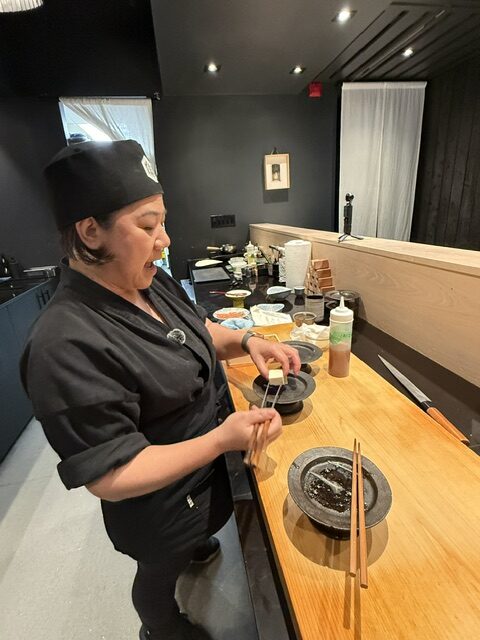
1st dish:
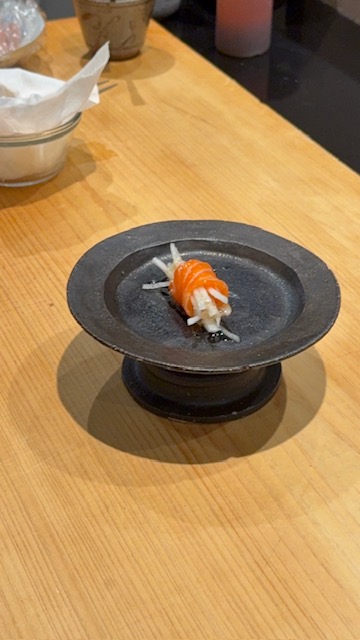
BC Wild Salmon Crudo
w/ Nashi pear (Japanese pear)
w/ shio koji dressing
How were you able to open your own omakase-focused restaurant?
I work closely with our fish supplier to get the freshest fish from Japan. I also learned a lot of my skills from my mentor, and I’ve been everywhere trying things and learning from other restaurants.
I’ve visited pretty much every three-star restaurant in Tokyo, South Kyoto, New York, Paris and London. It’s important for me to know what’s current and to understand the whole experience.
I’m really convinced that the taste itself is important. Nowadays, the way people experience dining has become totally different.
That’s why, when you asked me about the difference between the pre-Chef Hiroshi menu and what we offer now, we really focus on connection. I want people to come here for special occasions, and I want to make those occasions even more special. That’s what I’ve been really focused on.
2nd dish:
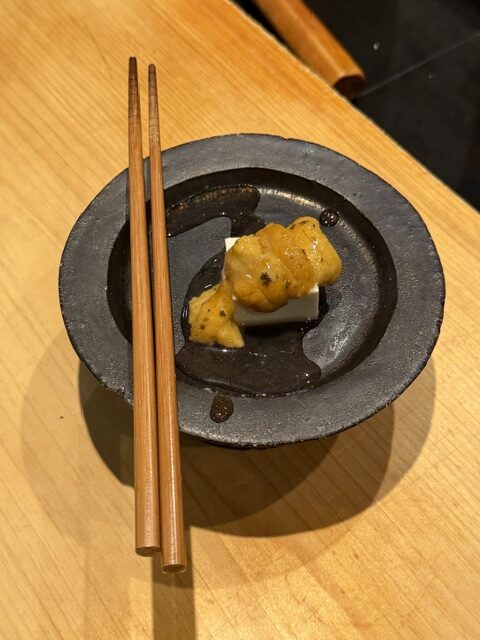
Sea Urchin & Tofu
Irizake – sake & mirin, pickled plum (ume boshi)
How different is the omakase from when Chef Hiroshi was here compared with now?
When Chef Hiroshi was here, he was really focused on sushi. We offered a Kyushu-style omakase.
Back then, the $250-per-person menu featured 20 pieces of sushi, one appetizer and a small dessert. It was very sushi-centric.
After he left, we changed our direction and lowered the price. Now, our omakase features a cold appetizer, two additional appetizers, some nigiri and temaki, a main dish and dessert. The price is $159 per person.
We also have more fish from Japan available. Anyone who wants to have more sushi can order additional pieces. If you enhance the meal with more sushi and seafood from Japan, the cost will increase to $220 or more per person.
What are your favourite ingredients to cook with at the restaurant?
I’m really into fermentation now. I started studying sake and learning more about it. I went to Nagasaki myself, and I’ve become really focused on fermentation.
It’s amazing how Japanese people discovered koji and used it for soy sauce, miso, sake and so many other things. We use it quite a bit.
I also grow my own koji.
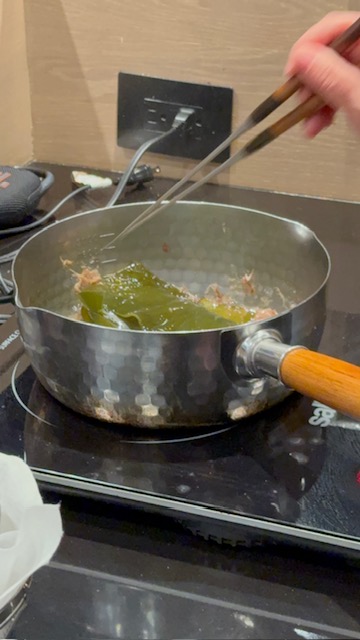
3rd dish:
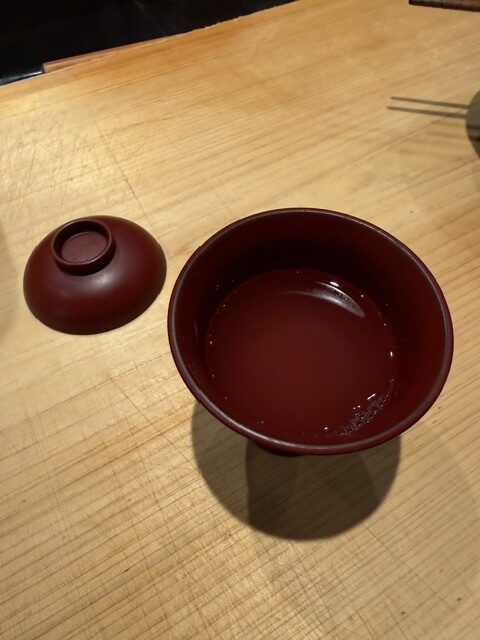
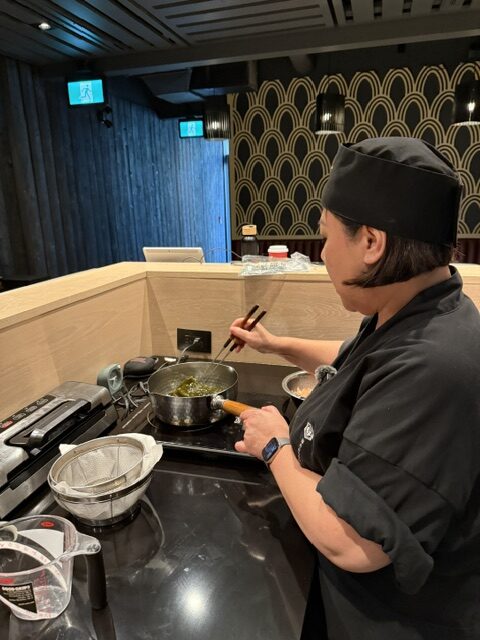
Dashi broth
You grow your own koji?
Yes. I have it growing in a mold, and I’ll show you later. We use it to make sauces and for marinating and koji fermentation.
What are your favourite restaurants outside of your own?
Kishimoto
Tableau
Cofu
What are your favourite ingredients to cook with?
Beef short ribs.
Local summer vegetables.
Fish trims.
4th dish:
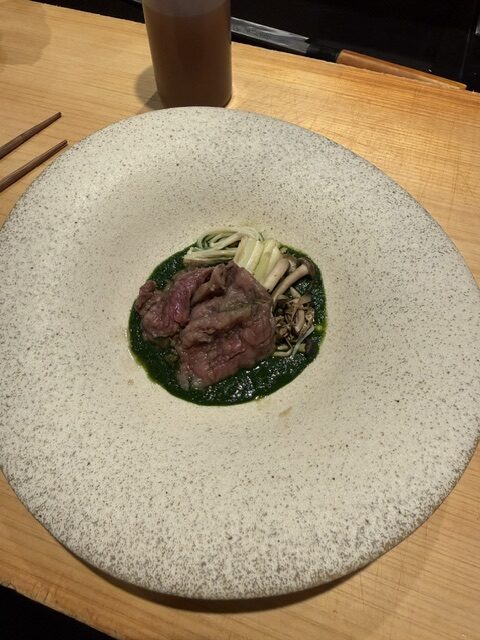
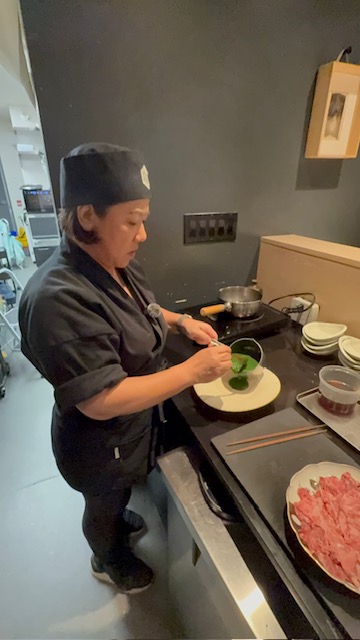
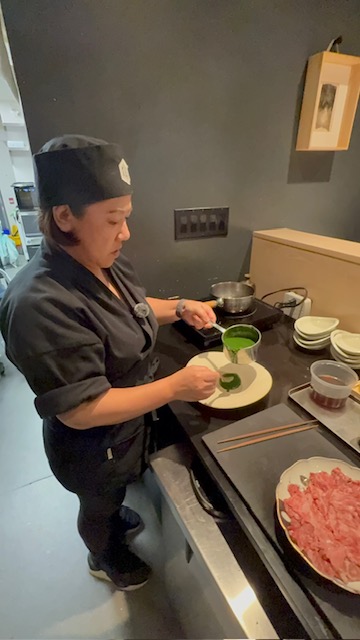
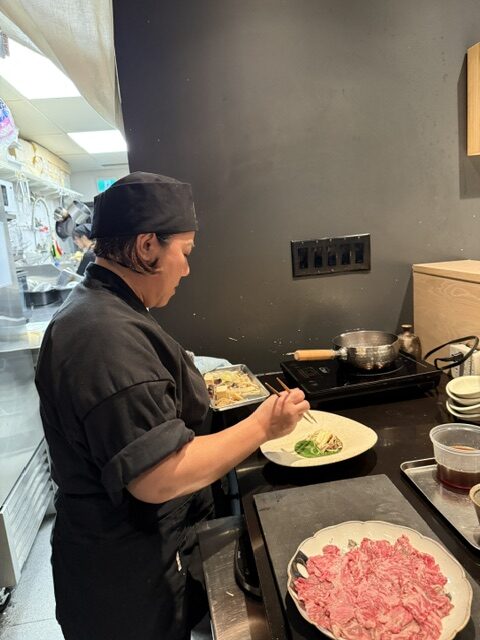
Sukiyaki
A5 Wagyu, mushrooms, tofu, leek, cresantmum leaves puree
Where is your favourite place to travel?
New York.
What do you like to cook at home?
Japanese-style curry. I grind my own spices and make my own version inspired by the curry served at hotels in Tokyo.
I also like making paella.
5th dish:
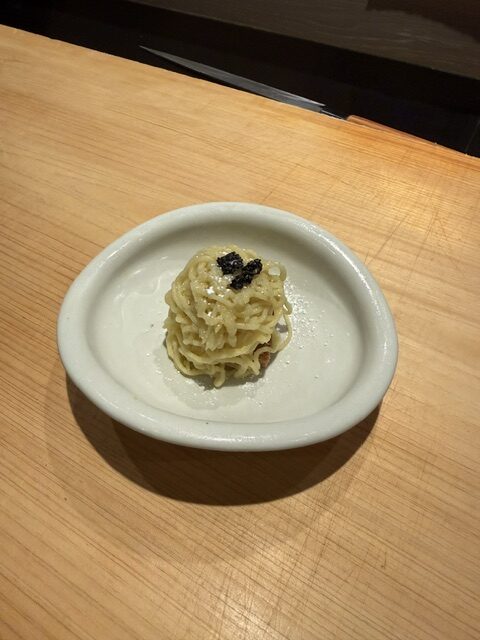
Dessert: Daigaku-lmo
University potato Mahana style
Soy sauce ice cream & Japanese
What is your favourite sake to pair with nigiri?
Fukucho Henpei Hattanso.
When is your new seasonal menu coming out?
Around the third week of September.
Stay tuned for the next chef in the Dishing with the Chef series.
By: Richard Wolak